Why Didn't They Tell You?

Dr. FRANK MARTINS COMMENTARY ON HISTORICAL, SOCIAL & ECONOMIC ISSUES OF OUR TIME

… that you are blessed to be living in the USA today?

… that you are blessed to be living in the USA today?

I have put this old post at the top because I believe that this message is needful for a time like this.

There is an old hymn called “Count Your Blessings” which admonishes us to take stock of the good things God has provided us with. With all of the unsettling things going on, I believe it is right and proper for we Americans to look around and count our blessings.

Being the 14th child of my parents’ 17 children, I have been blessed to have attained the age of 78 and to be in reasonably good health, with a sound mind. Before the end of the last century, I recall reflecting on the fact that by the year 2000, I would be 57! Twenty years later, that doesn’t seem so ancient anymore. My five surviving siblings have each attained three score and ten years or more (70, 75, 81, 84, and 86) and still have sound minds.  One of my brothers died at the age of 12 from an accidental gunshot wound. Five of the rest attained three score and ten years or better (73, 74, 74, 78, 84, and 87), one died in his forties, and the other three in their sixties. Though none of us have achieved the longevity of our great grandmother Jane (107+) or our Cousin Dora Leonard Brown (108), God has blessed us with reasonably long life. I am blessed to have five siblings still in the land of the living.

Though we have experienced tragedy such as the recent untimely death of my great niece Tasha Sams Saucier, my siblings, nieces and nephews, and I can look back upon where we came from and truly say, “Thank you God”. Sixty to seventy years ago in the month of July with its stultifying heat, many of us were working in cotton fields in the Mississippi Delta from sunup to sundown with only an hour break in the middle of the day. We returned home to houses with no running water, no electricity, outdoor toilets, no radio, no television, and no air-conditioning. Sometimes the only transportation we had was mules hitched up to a wagon! This scenario describes the situation of millions of other families (black and white) in the rural South of the United States in the middle of the 20th century.

Today everybody, whether in the rural South or urban North, has running water, air-conditioning, electricity, microwave ovens, cellphones, and televisions in almost every room. Most families have at least one car. Besides these creature comforts, we are free to worship as we please, regardless of our religious affiliation. We are free to express our opinions. We are free to start businesses; many who start out with nothing become millionaires. Today we have Black Billionaires (Oprah Winfrey, Jayz, and Kanye West are three examples); Dr. Dre and Sean Combs are very close to being billionaires. With the election of Barack Obama as President of the United States for two terms, any doubt about the possibilities for people of color in the political arena should have been shattered. In short, we Americans are blessed because we are living in the land of great opportunity, and millions are taking advantage of it.

Poor people have access to food stamps and many receive money directly from the government. Various types of financial aid for college is available to poor students. Ivy League colleges and other elite colleges do not award merit scholarships, only need based scholarships, if the student has the proper academic preparation.

Though we are in the midst of this terrible Corona Virus Pandemic, hope is on the horizon. More treatments are becoming available, and promising vaccines are also being developed. I consider treatments to be more pressing than vaccines since so many of the people who are already infected need help right now in overcoming this vicious disease. There is no doubt that we are going to overcome this ugly, nasty virus, hopefully very soon.

 Fellow Christians, you have something at your disposal regardless of you circumstances, and that thing is prayer. You must believe James 5:16b: “The effectual fervent prayer of a righteous man availeth much.” (KJV). I like the way the Amplified version puts it: “The heartfelt and persistent prayer of a righteous man (believer) can accomplish much [when put into action and made effective by God—it is dynamic and can have tremendous power].” You don’t have to be a bigshot to touch the Heart of God. Your prayers matter and will have an effect when sincerely offered up. Pray for speedy treatments and vaccines for COVID-19. Pray for the homeless, especially seeking God on how to address the mental health issues of the homeless. Ask the Father for direction that you may pray according to his will.

Prayer is not a substitute for action. They go together. If you see someone in need and have the means to help them, then you are obligated to do so. Ask God to give you wisdom and guidance in all your endeavors and He will do it.

And lastly, look around and count your blessings. Focus on the half full jar, not the half empty one.

… that the Constitution of the United States did not define a Black person as three-fifths of a person?

This is not a new but a repost of this blog that was launched a little more than a year ago. Since I have been in hiatus for a while and have heard repetition of the assertion that the U. S. Constitution counted Black People as two-thirds of a person, I thought it good to place my first blog at the top. For those who have followed me from the beginning, there is nothing new here but new posts are coming.

So the reasoning goes like this. One hundred percent of all slaves were Blacks; a slave was counted as three-fifths of a person in determining the state’s representation in Congress. Therefore, a black person was made to be three-fifths of a person. It should be clear that this is faulty reasoning. Why? Well, though 100% of slaves might have been black people, not a 100% of Blacks were slaves. Though a small minority (about 60,000 or 8% of the United States’ population when the Constitution was written), there were some free black people in the United States who had exercised their right to vote before and after the Revolutionary War (I refer you to John Hope Franklin’s From Slavery to Freedom for confirmation). They were counted in the “whole Number of free Persons” referred to in the passage and, therefore, counted as whole persons.

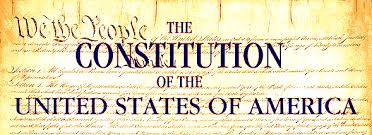
There is an assertion that one hears over and over again, namely, that the U. S. Constitution made Black people three-fifths of a person. It is, indeed, an assertion that has no factual basis. In fact, the paragraph in the Constitution where this idea comes from does not use the term Black, Negro, or African. The passage lists all those included in determining a state’s representation and taxation and ends with the phrase “three fifths of all other Persons” (read the wording of Article 1, Section 2, Paragraph 3 below). We know that the phrase refers to slaves since everybody else had been listed, including exclusions, in determining representation, and we know that 99+ percent of all slaves were black (there may have been a few enslaved Native Americans). You might as well say 100%.

Was this failure to mention color or race an oversight on the part of the framers of the Constitution? I think not. The founders of our country were well educated, thoughtful people. Indeed, I submit that not mentioning color or race was quite intentional. Is this important? I say yes. It is very important in demonstrating that the U. S. Constitution was not just written for white people! They said exactly what they meant to say and meant what they said.

This three-fifths rule worked to the disadvantage of the slave owning ruling class of the South since it had the effect of diluting the political power of the slave states, such as South Carolina and Mississippi which had majority black populations well into the 20th century. Nonetheless this is little consolation given the enormity of the evil of chattel slavery.

Next time I will give you President John Quincy Adams’ take on this issue.

References and Notes

Article 1, Section 2, Paragraph 3 of the U.S. Constitution reads:

Representatives and direct Taxes shall be apportioned among the several States which may be included within this Union, according to their respective Numbers, which shall be determined by adding to the whole Number of free Persons, including those bound to Service for a Term of Years, and excluding Indians not taxed, three fifths of all other Persons.

Click on the above paragraph to go to America’s founding documents (Declaration of Independence, U.S. Constitution, the Bill of Rights, and other resources)

... why the U. S. has birthright citizenship?

Why didn’t they tell you why the U. S. has birthright citizenship?

There has been a lot of discussion of birthright citizenship of late. The issue is being argued before the U. S. Supreme Court as I write these words. A news anchor/commentator recently noted that no other country has birthright citizenship and asked the question, “Why does the United States have it?” It does seem odd that the U. S. has birthright citizenship when none of the Europeans countries have it. But why we have it is not a mystery. The answer is that it was put in the 14th Amendment to the U. S. Constitution as part of the effort to assure equal rights for the recently freed slaves and free people of color. To fully understand why Congress felt a need to allow birthright citizenship for ex-slaves, we need to examine the reason(s) for the 13th, 14th, and 15th amendments, all addressing the plight of Americans of African descent in the aftermath of the end of the U. S. Civil War.

The 13th Amendment to the U. S. Constitution abolished slavery once and for all. The Emancipation Proclamation, a good thing, was a war measure that proclaimed slaves free in the states of rebellion. The problem was that it did not abolish slavery in the United States of America. In the slave states of Maryland, Delaware, Kentucky, Missouri, and West Virginia, which did not secede from the Union, one could legally enslave other people, even after the issuance of the Emancipation Proclamation. And in the states that it applied to, I am sure that there would have been challenges to the legality of the Proclamation which was essentially an executive order issued by President Lincoln. Apologists and supporters of slavery would have questioned the authority of the president to take such action. I am also sure that President Lincoln, being a lawyer, was aware of that possibility. That possibility was undoubtedly why he spent so much political capital to get the 13th Amendment passed by both houses of Congress. When he was assassinated all that was left to be done was the ratification by three-fourths of the states, which was achieved on December 6, 1865, just short of 8 months after the war was over (April 9, 1865) and after Lincoln was assassinated (April 14, 1865).

Abolishing slavery was only the beginning of the work of assuring the rights of the ex-slaves. Led by Charles Sumner, Republican Senator from Massachusetts, the two items that had to loom large in the minds of those fighting for the rights of ex-slaves were citizenship and the right to vote. Meanwhile the ex-Confederates were quickly putting in place things that essentially kept the ex-slaves still enslaved, such as the infamous Black Codes. All this was helped on by the then President Andrew Johnson whose sympathy was more for the ex-Confederates than the ex-slaves.

A few years before the Civil War started (1857), the U. S. Supreme Court issued its infamous Dread Scott decision. The majority opinion was written by Chief Justice Roger B. Taney who opined that people of African descent could not be citizens of the United States because they were not part of the people and had no role in forming the country and the Constitution. There were two dissenting opinions, one by Justice Benjamin Curtis and the other by Justice John McLean. Justice Curtis in a brilliant dissent obliterated the argument put forth by the majority opinion that Americans of African origin were not part of “We the People”, and Justice McLean argued that an enslaved person born in the country became a citizen upon being freed. This latter position was codified in the 14th Amendment.  But until the 14th Amendment was ratified, the opinion of the majority held sway and was the last word on the matter. In the absence of the 14th Amendment, those opposing citizenship and the right to vote for Black People could have gone right back to the Dred Scott opinion. Led by Charles Sumner, the Republicans had a large enough majority to push the 14th and 15th Amendments through the Congress and to get them ratified by the required number of states.

The 14th Amendment was ratified on July 9, 1868 and the 15th Amendment on February 3, 1870.

Section 1 of the 14th Amendment states that “All persons born or naturalized in the United States …are citizens of the United States … No State shall make or enforce any law which shall abridge the privileges or immunities of citizens of the United State; nor shall any State deprive any person of life, liberty, or property, without the due process of law; nor deny to any person within its jurisdiction the equal protection of the laws.”

It seems to me that the whole paragraph is addressing issues that Black People in the South were up against in face of the ex-Confederates’ push to re-institute de facto slavery. Except for a few, all of the ex-slaves were born in the United States. Therefore, the citizenship issue for Black People is taken care of by saying that you are a citizen if you were born here. Citizenship and the right to vote are coupled because if you are not a citizen, you cannot vote. In other words, the citizenship issue had to be solved before the franchise issue could be settled.

It is understood that provisions meant to address the conditions of ex-slaves and people of color may have broader applicability.

The 15th Amendment addresses the right of citizens to vote. Section 1 states that “The right of citizens [my italics] of the United States to vote shall not be denied or abridged by the United States or by any State on account of race, color, or previous condition of servitude.”

Please notice that the 15th Amendment conferred the right to vote on citizens. In the former slave states, black citizens were being denied the right to vote even though the 14th Amendment had already been passed, granting citizenship. How could they speak to the franchise right if citizenship had not been granted? The 14th Amendment to the U. S. Constitution nullified Taney’s opinion in the Dred Scott case and cleared the way for citizens of color and citizens who had previously been slaves to vote.

In a case in 1898, the U. S. Supreme Court upheld birthright citizenship for Wong Kim Ark who was born in the United States of Chinese parents who were not citizens, based on the 14th Amendment. On the face of it, it seems like a slam dunk for birthright citizenship today. Nonetheless, how the Supreme Court will rule this time nobody knows.

That Egypt is in Africa and Ancient Egypt Was an African Civilization

“… and the truth shall make you free.”

— Jesus of Nazareth (John 8: 32b)

Why Didn’t They Tell You That Egypt is in Africa and Ancient Egypt Was an African Civilization

Obviously Egypt (the Arab Republic of Egypt) is physically located on the Continent of Africa but today is generally thought of as being a part of the Middle East or Near East. It is aligned culturally, religiously, and racially with Western Asia (Saudi Arabia, Iraq, Syria, Lebanon, and the Sheikdoms of the Persian Gulf are among the countries included in this group). This kind of shift in perspective is not unique to that region of the world. Some years ago, I was surprised, somewhat taken aback, when at a professional education meeting in the Deep South a young man from a college in Virginia commented that this was his first time in the South. Some people no longer consider Virginia to be a southern state because culturally, politically, and in other ways it may identify more with the Northeast than the Southeast. Be it as it may, this new perspective cannot take Virginia out of the South historically; Virginia was a slave state, a leading member of the Confederacy, a Jim Crow state, and sits south of the Mason-Dixon Line.   

It does not take much imagination to see that over a period of 5,000 years or more, the Egyptian people changed racially and otherwise. A constant flow of Asiatics, Assyrians, Persians, Macedonians, and the Arab conquest about 1,400 years ago certainly lightened the population, especially in the north. With whom did the ancient Egyptians identify?

Four to five thousand years ago, who did the Ancient Egyptians more closely identify with, Asiatics of western Asia or Africans to the south of Egypt? The answer is unequivocal. They identified with the black people to the South, in the interior of Africa. The late Basil Davidson, who spent a lifetime studying African people and cultures, observed that “…this “God’s land” which the old Egyptians believed to lie west of the Nile and which had, for them, a mystical significance linked to their own remote ancestry.” (Lost Cities of Africa, p. 31). They looked to the south and west, perhaps to areas such as Nabta Playa, near the present day border of Egypt and Sudan. In another of his works, Davidson further observes that “The peopling of pre-dynastic Egypt’ to quote Fairman again, ‘must have been largely the result of the desiccation of the Sahara.’ The ancient Egyptians belonged, that is, not to any specific Egyptian region or Near Eastern heritage but to that wide community of people who lived between the Red Sea and the Atlantic Ocean, shared a common Saharan-Sudanese culture,’ and drew their reinforcements for the same great source, even though, as time went by, they absorbed a number of wanderers from the Near East.” (Africa in History, p. 15).  

Close Ties between Egypt and Nubia (Kush, Ethiopia)

Whenever order broke down in Egypt, the Egyptians looked to the South for deliverance. As the Old Kingdom came to an end, Egypt was plagued by Asiatic and Libyan invaders for 150 years, during the First Intermediate Period (2130-1980 B.C) of disorder. The Egyptians looked to the South for help. In the Prophecy of Neferty, it was written,

There is a king who will come from the South

Ameny true of voice is his name

He is born of a woman of the Land of the Bow

He is a child of the heartland of Nekhen

He will take up the White Crown

He will unite the Two Mighty Goddesses

He will appease the Two Lord Gods,

With what they desire.

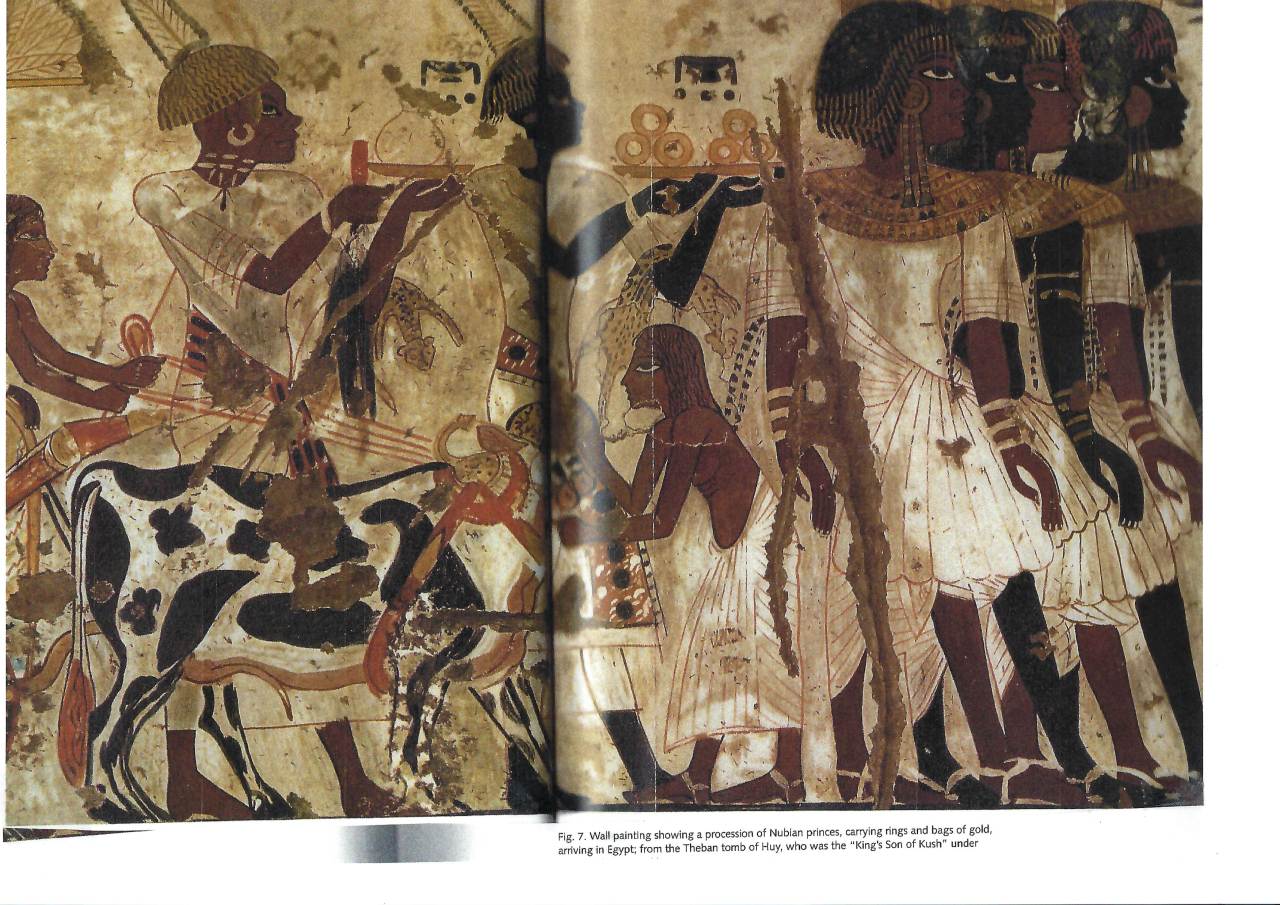
This prophecy is associated with the 12th Dynasty because it is believed that the name Ameny in the second line refers to King Amenemhat I, the first king of the glorious 12th Dynasty. The prophecy said that this king from the South, son of a woman of the “Land of the Bow”, will unite the two lands and deliver them from the Asiatics. The Land of the Bow is Nubia (Kush or Ethiopia). The king will possess legitimacy as the son of a Nubian woman who is evidently of royal blood and a king maker. My concern is not with whether or not this is even a true prophecy in the sense of being uttered before the event. What I want to emphasize is the fact of where the ancient Egyptians turned for help. They looked to the South. The next time order broke down at the end of the Middle Kingdom, leaders from the South, evidently Nubians, moved north, threw out the foreigners, and unified the country again to begin the glorious New Kingdom.

The last time the Egyptians appealed to the Southerners was the beginning of the 25th Dynasty. Before the Kushites engaged in any warfare in Egypt, the Kushite King Kashta had traveled to Thebes, from his capital of Napata in Kush, “where he was confirmed in power by the priests of Amon.” (W. Y. Adams, Nubia: Corridor to Africa, p. 260). This event occurred before 751 B. C, the year Kashta died. After Kashta’s death, Piankhi ascended to the throne. When the priest and military leaders at Thebes became alarmed over the actions of the Libyan nomarchs in northern Egypt, they appealed to Piankhi for help. He eventually heeded their call for help. He did not go north to invade Egypt but to ward off Libyans who were trying to take Thebes.

Recently two archaeologists, Timothy Kendall and El-Hassan Ahmed Mohamed, working in the Sudan (country in which ancient Kush was located) at the ancient sites of Jebel Barkal and Napata (ancient capital of Nubia) located between the 3rd and 4th cataracts of the Nile, have done some remarkable work and published some of their results in a visitor’s guide entitled Nubian Karnak: Jebel Barkal and its Temples. A few quotes will suffice to demonstrate some of their remarkable findings.

 In referring to the ceremony at Thebes called “the going forth of Min”, the authors note that “Here Min-Amun’s Nubian origins are again made clear by the fact that the liturgy was to be performed by a “Nubian of Punt” who, like the god himself, was pictured as black [this writer’s italics]. … Behind the priests carrying the statue of the ithyphallic (erect penis) god appear others carrying smaller statues representing Egypt’s most prominent former kings (36 altogether), from the present king going back to Menes, the historical first. The ceremony implies that the Egyptians recognized the “royal ka” as having passed from a primeval Nubian Min (identified in those scenes only as Amun-Re Kamutef) to Menes and then to all later kings of Egypt to the present!”

Finally I want to share a few more enlightening quotes from Randall and Mohamed, which put a different light on the Egyptian 25th Dynasty:

“Given what we have learned about Jebel Barkal, we can perhaps begin to view the rise of the Native Nubian dynasty at Napata in a different light: not as the anomaly of history that the Egyptologists have traditionally considered it but rather as a Kushite nationalistic effort to reprise an event from their legendary past. The event in question, of course, was that, described above, reported by Diodorus (3.3,2-7): that at the beginning of time Egypt was first settled by by Kushites (Aithiopeans), who introduced civilization there through their leader and first king, Osiris, who also introduced the white crown.”

Diodorus was not the only Greek who believed that Egypt was colonized by Kushites (Ethiopians). As a matter of fact, they seemed pretty certain that the Nubians were anterior to the Egyptians. When the Kushites took over in Egypt to form the 25th Dynasty, Egypt had declined artistically, culturally, and in other ways. The 25th Dynasty kings engaged in works of restoration. That was the reprise, doing again what their ancestors had done more than 2,000 years before.

The 25th Dynasty Kushite kings changed the crown to the “Cap Crown” with two uraei, one being the white crown of Upper Egypt and the other being the red crown of Lower Egypt. Thus “By duplicating the mountain [the crown was formed like the mountain, Jebel Barkal], the Cap Crown proclaimed its wearers to be sons of the ancient god of Napata, the possessors of he “royal ka”, and the only legitimate heirs to the god’s first kingship, which united the lands of Kush, Upper Egypt, and Lower Egypt.”

Two thousand ago a young Rabbi from Nazareth said that the truth will make you free. That is still true today.

that Egyptologists, Archeologists, Paleontologists, and Historians need to come clean about Ancient Egypt?

Egyptologists, Archeologists, Paleontologists, and Historians coming clean about Ancient Egypt

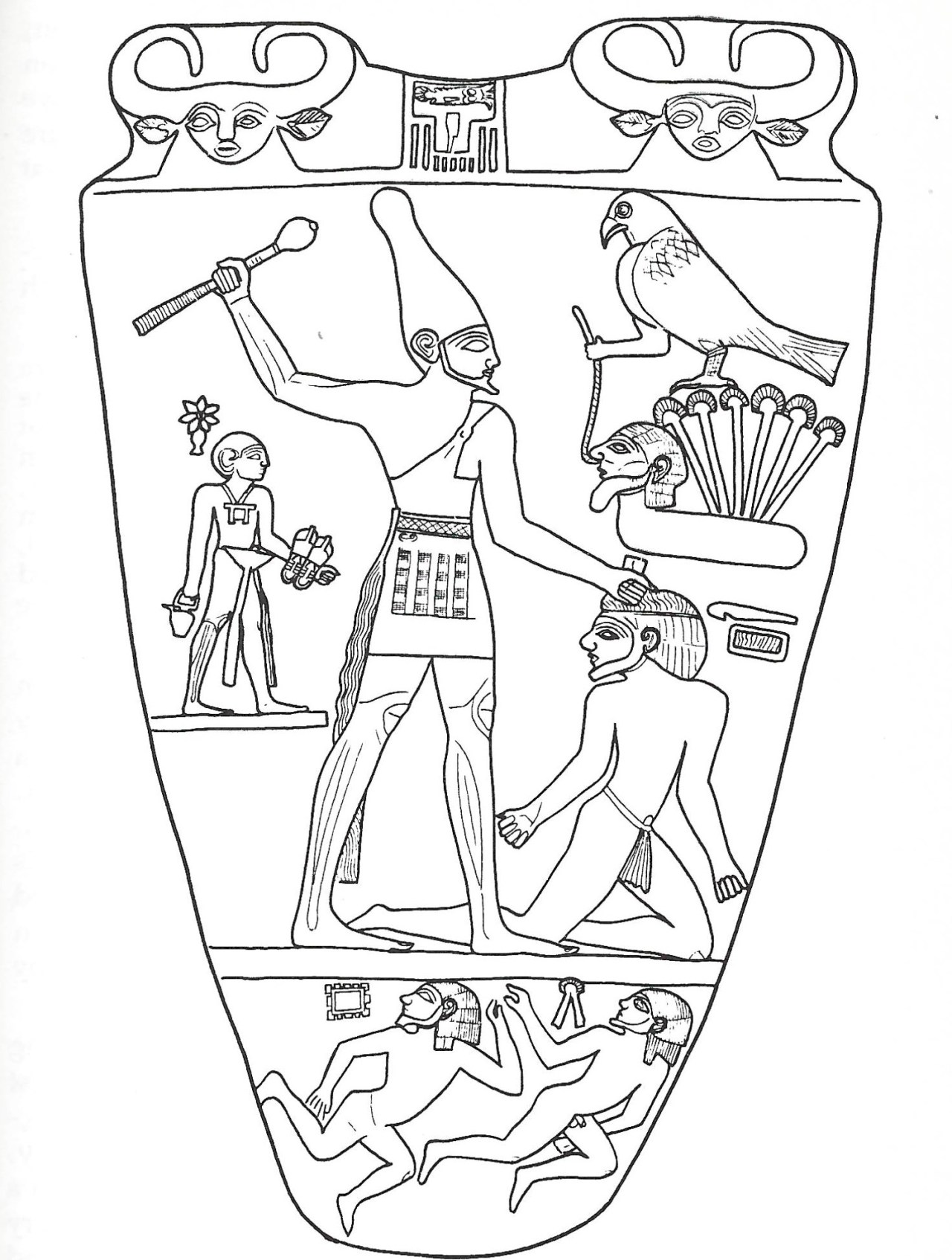
The featured image of this post shows Menes (also called Narmer) wearing the white crown of Upper (Southern) Egypt as the first Pharaoh of the Two Lands subduing Asiatics from the Delta (the most northern part of Egypt).

Paraphrasing what the great Egyptologist and renaissance man of letters Cheikh Anta Diop said in his masterful work African Origin of Civilization: Myth or Reality, until the Egyptologists, Archeologists, Paleontologists, and Historians come clean, we (the world) will not have an accurate understanding of the origins and evolution of world civilization and history, especially western civilization, until we correctly connect ancient Egypt with Africa. All of the above specialists want to start Egyptian history around 3,100 B.C., around the time that Mesopotamian civilization is said to have started. What does Egypt look like around 3,100 – 3,200 B.C.? Most importantly, it has achieved empire status with the conquest of much of what is now Lower Egypt giving it an empire that extends at least from the apex of the Nile Delta to the first cataract of the Nile River, a distance of about 700 miles and hundreds of miles wide. They had a system of writing, mathematics, and well-developed organizational skills needed to rule and administer such a large area. This was not a civilization that is in its infancy.

I turn to the eminent Egyptologist (some would say the greatest Egyptologist to ever live) Sir W. M. Flinders Petrie who said, “To suppose that the civilization we find under Menes [first Pharaoh of the Two Lands] started full-blown at that age, or to suppose that the dynastic conquerors of Egypt had no rulers before their acquisition of the whole country, is necessarily absurd. Before a king of Thinis-Abydos (from which Menes came) could possibly proceed to establish a new capital for the lower country at Memphis, the way must have been prepared by a long series of predecessors conquering and consolidating their power. That such a course of organization occupied three or four centuries is highly probable. “(A History of Egypt, Part One, p. 2). It would be just as absurd to hold that the essential elements of the American civilization began when the Europeans settled in North America in the early 17th century. They brought with them all the elements needed to plant an advanced civilization: writing, religion, organizational skills, and manual/technical skills such as those needed for building houses and other structures. Without bringing with them certain knowledge, it would not have been possible to establish a university, namely, Harvard, in less than two decades after landing at Plymouth. It took more than three or four centuries for these things to develop in England, even after receiving a jump start from Rome.

Below I will list several areas where the above listed academic specialists need to come clean and in subsequent posts, I will elaborate and expand upon each.

1. Stop trying to take ancient Egypt out of Africa.  

2. Stop the attempts to disassociate Cush/Ethiopia and Ancient Egypt by pretending that Ancient Egypt was only interested in Cush as a colony of Egypt in the same way that European colonialism operated in the 18th, 19th, and 20 centuries. Stop denying the kinship of Ancient Cush/Nubia and Ancient Egypt.

3. Stop pretending that the only black pharaohs were those of the 25th Dynasty and that the 25th Dynasty started as an invasion of Egypt by Cushites, usually associated with Piankhi’s conquests of the nomarchs (kinglets) scattered throughout Lower Egypt. Instead of speculating about black pharaohs, why not ask the question: who were the white pharaohs of Egypt, before the Macedonians (who came about 330 B. C.)? There were some.

4. Stop denying the physical connection between ancient Egyptians and black Africans? It is not a fluke that 23andme identified Rameses III and me, an American of African descent, as having a common ancestor that probably lived in north Africa or western Asia.

5. Stop denying the southern, African origin of the ancient Egyptians. The ancient Egyptians always looked south for help, spiritual and natural, and that’s where help always came from, for several thousand years.

Next post deals with the attempt of Egyptologists, Archeologists, Paleontologists, and Historians to take Egypt out of Africa.

… that the Constitution of the United States did not define a Black person as three-fifths of a person?

“… and the truth shall make you free.”

— Jesus of Nazareth (John 8: 32b)

Why didn’t they tell you that the Constitution of the United States did not define a Black person as three-fifths of a person?

There is an assertion that one hears over and over again, namely, that the U. S. Constitution made Black people three-fifths of a person. It is, indeed, an assertion that has no factual basis. In fact, the paragraph in the Constitution where this idea comes from does not use the term Black, Negro, or African. The passage lists all those included in determining a state’s representation and taxation and ends with the phrase “three fifths of all other Persons” (read the wording of Article 1, Section 2, Paragraph 3 below). We know that the phrase refers to slaves since everybody else had been listed, including exclusions, in determining representation, and we know that 99+ percent of all slaves were black (there may have been a few enslaved Native Americans). You might as well say 100%.

So the reasoning goes like this. One hundred percent of all slaves were Blacks; a slave was counted as three-fifths of a person in determining the state’s representation in Congress. Therefore, a black person was made to be three-fifths of a person. It should be clear that this is faulty reasoning. Why? Well, though 100% of slaves might have been black people, not a 100% of Blacks were slaves. Though a small minority (about 60,000 (8%) when the Constitution was written), there were some free black people in the United States who had exercised their right to vote before and after the Revolutionary War.(I refer you to John Hope Franklin’s From Slavery to Freedom for confirmation.) They were counted in the “whole Number of free Persons” referred to in the passage and, therefore, counted as whole persons.

Was this failure to mention color or race an oversight on the part of the framers of the Constitution? I think not. The founders of our country were well educated, thoughtful people. Indeed, I submit that not mentioning color or race was quite intentional. Is this important? I say yes. It is very important in demonstrating that the U. S. Constitution was not just written for white people! They said exactly what they meant to say and meant what they said.

This three-fifths rule worked to the disadvantage of the slave owning ruling class of the South since it had the effect of diluting the political power of the slave states, such as South Carolina and Mississippi which had majority black populations well into the 20th century. Nonetheless this is little consolation given the enormity of the evil of chattel slavery.

Next time I will give you President John Quincy Adams’ take on this issue.

References and Notes

Article 1, Section 2, Paragraph 3 of the U.S. Constitution reads:

Representatives and direct Taxes shall be apportioned among the several States which may be included within this Union, according to their respective Numbers, which shall be determined by adding to the whole Number of free Persons, including those bound to Service for a Term of Years, and excluding Indians not taxed, three fifths of all other Persons.

Click on the above paragraph to go to America’s founding documents (Declaration of Independence, U.S. Constitution, the Bill of Rights, and other resources)

… that the Constitution of the United States did not define a Black person as three-fifths of a person?

“… and the truth shall make you free.”

— Jesus of Nazareth (John 8: 32b)

Why didn’t they tell you that the Constitution of the United States did not define a Black person as three-fifths of a person?

There is an assertion that one hears over and over again, namely, that the U. S. Constitution made Black people three-fifths of a person. It is, indeed, an assertion that has no factual basis. In fact, the paragraph in the Constitution where this idea comes from does not use the term Black, Negro, or African. The passage lists all those included in determining a state’s representation and taxation and ends with the phrase “three fifths of all other Persons” (read the wording of Article 1, Section 2, Paragraph 3 below). We know that the phrase refers to slaves since everybody else had been listed, including exclusions, in determining representation, and we know that 99+ percent of all slaves were black (there may have been a few enslaved Native Americans). You might as well say 100%.

So the reasoning goes like this. One hundred percent of all slaves were Blacks; a slave was counted as three-fifths of a person in determining the state’s representation in Congress. Therefore, a black person was made to be three-fifths of a person. It should be clear that this is faulty reasoning. Why? Well, though 100% of slaves might have been black people, not a 100% of Blacks were slaves. Though a small minority (about 60,000 (8%) when the Constitution was written), there were some free black people in the United States who had exercised their right to vote before and after the Revolutionary War.(I refer you to John Hope Franklin’s From Slavery to Freedom for confirmation.) They were counted in the “whole Number of free Persons” referred to in the passage and, therefore, counted as whole persons.

Was this failure to mention color or race an oversight on the part of the framers of the Constitution? I think not. The founders of our country were well educated, thoughtful people. Indeed, I submit that not mentioning color or race was quite intentional. Is this important? I say yes. It is very important in demonstrating that the U. S. Constitution was not just written for white people! They said exactly what they meant to say and meant what they said.

This three-fifths rule worked to the disadvantage of the slave owning ruling class of the South since it had the effect of diluting the political power of the slave states, such as South Carolina and Mississippi which had majority black populations well into the 20th century. Nonetheless this is little consolation given the enormity of the evil of chattel slavery.

Next time I will give you President John Quincy Adams’ take on this issue.

References and Notes

Article 1, Section 2, Paragraph 3 of the U.S. Constitution reads:

Representatives and direct Taxes shall be apportioned among the several States which may be included within this Union, according to their respective Numbers, which shall be determined by adding to the whole Number of free Persons, including those bound to Service for a Term of Years, and excluding Indians not taxed, three fifths of all other Persons.

Click on the above paragraph to go to America’s founding documents (Declaration of Independence, U.S. Constitution, the Bill of Rights, and other resources)

... how rice came to Louisiana?

Featured Image: Cooked Rice

In south Louisiana, rice is probably the most important staple in the cuisine of this area. We don’t just eat rice with red beans and rice but with many other dishes including greens of all types (collards, mustards, turnips, etc.). And eating gumbo without rice would be like eating ham and eggs without eggs. So how did rice come to Louisiana?

It was introduced from West Africa during the early 1720’s. I quote, “Scholars have learned precisely how rice came to Louisiana, when it arrived, and how, and why. In 1719 and 1721, it arrived in two slave ships, Aurore and Duc du Maine. Each captain had been instructed by the French Company of the West to buy three or four barrels of rice for seed, and to purchase slaves who knew how to cultivate it. It was done and by 1720 African Oryza glaberrima was growing in Louisiana. In the early years, this African staple, with African methods of raising and cooking it, helped sustain a struggling American colony.”  (David Hackett Fischer, African Founders, p. 415).

Since the first Africans brought into Louisiana came from Senegambia (Senegal and Gambia) in the time period from 1719-1721, the seed rice was probably bought in the rice-producing areas of Senegal or Gambia, perhaps from Mandingos who were an important ethnic group in the area. The area from Senegal to around Liberia to the south was known as the Grain or Rice Coast by early European explorers, before it was called the Windward Coast, indicating the importance of rice and other grain production in the area, grains such as sorghum and millet, both native to Africa.

Other eminent scholars such as Peter H. Wood and Judith A. Carney document how rice came from Africa to the Low Country, South Carolina and Georgia, and how knowledge of rice growing, cultivation, and processing spread throughout the Americas (Mexico, Central America, South America and the Islands). Carney’s conclusion touching on this matter is instructive: “Only by understanding West African rice cultivation as an assemblage of integrated component parts can one grasp the full complexity of indigenous knowledge that enabled the crop’s adaption to so many different locales. In planting numerous lowland and upland land environments along a landscape gradient, farmers had at their disposal a rich assortment of techniques that could be adjusted to specific soil and water conditions. Such techniques formed the corpus of a sophisticated knowledge system native to West Africa. Owning its origins to the achievements of African agriculture in the millennia [thousands of years] prior to the Atlanta slave trade, indigenous knowledge of rice culture enabled the crop’s cultivation over s broad area of the Grain or Rice Coast. During the sixteenth and the seventeenth centuries this African repository of knowledge would provide the principles and flexibility for adapting race under new conditions in the Americas.” (Carney, Black Rice, pp. 28-29).

The above examples of transfers of material culture from Africa to America is just one of many and is not just an important item of black history but an important item of the history of Louisiana that all Louisianans should be aware of in order to have complete picture of the history our state and nation.

... that Cleopatra was not black because she was not of Egyptian origin

Featured Image: Ptolemaic Egyptians

With the release of the latest Cleopatra movie depicting Cleopatra as a black woman, much controversy has been stirred up over the question of the race of Cleopatra. I am quite certain that Cleopatra was not black, but white, because she was not of Egyptian stock but of Macedonian origin. Macedon, where Alexander the Great hailed from, was located in Southeastern Europe. As they are today, the Macedonians were closely associated with the Greeks when Alexander the Great conquered Egypt and inaugurated the period of Macedonian/Ptolemaic rule in Egypt.i why?

Egypt was conquered in 332 BC by Alexander the Great of Macedon as he went on his conquering rampage. When Alexander died, at a very young age, his conquered empire was divided up amongst three of his generals. The part that went to the general Ptolemy included Egypt. This Macedonian/Ptolemaic rule in Egypt lasted some 300 years, until 30 BC when Egypt was made a province of Rome by Caesar Augustus. Cleopatra was the last Ptolemaic ruler of Egypt. Dynastic Egypt had passed away with the end of the 30th Dynasty in about 343 BC. After that, Egypt was ruled by one group of foreign conquerors after another; the most far-reaching of all the conquests was the Islamic Arab conquest of the 7th century AD.

Because the Ptolemaic rulers did not impose their culture on Egypt but, instead, became egyptianized, one may be fooled into thinking that the Egyptians of the Ptolemaic period were the same as the dynastic Egyptians of, say, King Tut. Nothing could be further from the truth. King Tut was clearly a young black boy. The “Egyptians” of Cleopatra’s reign were clearly Europeans (See Featured Image).

Though they became Egyptianized, the Ptolemies did make significant contributions to Egyptian and world civilization in their own right. They built the city of Alexandria, named for Alexander the Great, into a great city that became the center of Greek learning and scholarship. It became an important outlet for the expression of Greek genius. Of course by the time of Cleopatra, Egyptian civilization is more than 3,000 years old and was more ancient to Cleopatra than she is to us today.

If one is looking for a black female to look up to as a great ruler that was a contemporary of Cleopatra, one need only look to the south of Egypt. Though Cleopatra struggled to keep Egypt’s independence, to no avail, to the south of Egypt in Nubia (Cush), Queen Amanirenas waged a five-year war against the Romans and, one might say, in the end won the war, in spite of losing or not winning, all or most of the battles. Adam’s conclusion was, “In their campaign against the Romans, the Meriotes apparently lost all the battles but won the war, in the sense that their larger objective was attained.” (W. Y. Adams, Nubia: Corridor to Africa, p. 41). Meriotes refers to the inhabitants of Meroe, capital of Cush, located between the 5th and 6th cataracts of the Nile River, during the reign of Amanirenas. The larger objective was to maintain Nubian independence and the status quo in the area of northern Nubia bordering on Egypt. That she did. She negotiated a peace treaty with Rome and set up diplomatic relations with the exchanging of ambassadors.

We can point to many important and admirable Black People from the ancient world; there is no need to try and claim Cleopatra as black.

Postscript

There were actually seven Ptolemaic queens of Egypt. When we say Cleopatra without specifying which one, we can assume that we’re talking about Cleopatra VII, the one who dallied with Mark Anthony and Caesar.

Source for Ptolemaic images: https://www.researchgate.net/figure/Remarkable-Egyptian-women-during-the-Ptolemaic-time-Panel-A-depicts-Queen-Cleopatra_fig2_312088643

... about the Stable and Safe Pre-European African Societies.

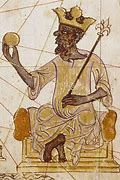
Featured Image: Mansa Musa, Emperor of Mali (1312 – 1327 AD)

Before Black History Month is over, I felt compelled to share with you something that has been on my mind and my heart for a while. During the month of February, we look back at the history of Black People both in America and Africa for perhaps some guidance or inspiration that may help us address problems we are dealing with now. We have a problem in our black communities that is threatening to destroy us, namely, violence, and specifically a murder spree that is stuffing out the lives of our people, especially young males, at an alarming rate. We are killing each other and subjecting each other to other types of violence such as robbery and hijackings. Many of the large cities where so much of this killing is occurring have Black majors and/or Black police chiefs, cities such as New York, Chicago, Buffalo, Detroit, New Orleans, Baltimore, Denver, St. Louis, Washington, D.C., and Birmingham are just a few. I issue a challenge to Black mayors and police chiefs.

Here is the challenge: Make your cities oases of safety, order, and stability by looking to pre-European Black African societies, renowned for safety, stability and order, as inspiration.   

What am I talking about?

In the middle of the 1300’s (late Middle Ages), Moroccan traveling scholar Ibn Batuta “found complete and general safety in the land [West African Empire of Mali]. Its inhabitants, he considered, had ‘a greater abhorrence of injustice than any other people … Neither the man who travels nor he who stays at home has anything to fear from robbers or men of violence’.”1

This area of Senegambia where the Empire of Mali was centered was considered by the North Africans to be part of the Lands of the Blacks.

If we fast forward 500 years to the other side of the Continent in East and South Africa in the 1850’s, we hear a similar report. Basil Davidson wrote that “After his journeys through central Africa Livingstone repeatedly commented on the peace and security that reigned over great expanses of the interior, and Krapf in east Africa at about the same time would find the same thing … and there was perfect security for life and property2

This was a persistent theme over space and time. It was not accidental that these societies became paragons of safety, order, and stability. The underpinning of the system were a mature legal structure of law and a world view that viewed right order as “the right and the natural”.3

A precedent for a notion as outlined above is Maulana Karenga’s creating Kwanzaa, a celebration based on and inspired by African ideals. The names of the seven principles of Kwanzaa are all Swahili, a widely spoken language in East Africa.

If you as black leaders want to demonstrate your conviction that Black lives matter, your focus has to shift from the relatively small number of black killings by the police (less than 10% of the total) to the much, much larger number of Blacks killed by Blacks. I’m not suggesting that you neglect the wrongful killings committed by the police; all law breakers should be brought to justice. You can chew gum and walk at the same time.

Why not aspire to see a time when people will say, “If you visit a city with a Black mayor, you will be safe and secure”? Working together, you can do it and leave a wonderful legacy for future generations.

All italics are the author’s.

1. Basil Davidson, Lost Cities of Africa, p. 101. 2. Ibid, p. 318). 3. Basil Davidson, The African Genius.

... that Kamara was right? Africa use to be great.

Alvin Kamara and Making Africa Great Again

Some readers may recall Saints Running Back Alvin Kamara (#41) wearing a headband saying “Make Africa Great Again”, during the 2018-2019 football season. Indeed by 1200 AD (by the Middle Ages), before the time of European incursions into the Continent via the Atlantic, many societies of Sub-Sahara Africa had achieved greatness. The reports of Islamic Arab travelers and the first Europeans explorers to West Africa attest to the greatness of West Africa. They found the area teaming with people, before the Islamic and European incursions. They had to have had large populations in order to supply the millions and millions of people who were brought to the New World and taken across the Sahara.

They were agriculturists, farmers, for the most part. They were able to sustain the large populations because they produced lots of food, enough food to sustain the dense populations and still have some left over. The Europeans went there to trade in goods, and they did that, but eventually the trade turned into trading in people more than in goods.

The West Africans were prolific traders with trade routes crisscrossing the region. This trade was with North Africa, Egypt, the Sudan, East Africa, within the Western Sudan, and other parts of the Continent. It was one of the keys to their to their being able to accumulate wealth of the magnitude of that achieved by the Kingdom of Mali in the 1300’s that allowed kankan Mansa Musa to make a lavish pilgrimage to Mecca, spreading so gold along the way that economies of the Middle East were disrupted with an inflation that lasted for years. This was about a decade after the former Emperor, his brother Abubakari the Second, had outfitted two massive fleets of ships to explore lands, which they believed existed, to the west across the Atlantic. Abubakari himself headed up the second expedition across the seas. They di not return to Mali but there is ample evidence that they made it to the Americas and greatly impacted Medieval American culture, especially in Mexico.

These Africans knew how to do things. They excelled in different types of artisanry. For example, they knew how to produce the iron (almost all African people knew iron smelting by the beginning of the Christian era) which was used to produce the implements, such as hoes and shovels, needed to cultivate the many crops they produced. Many of these crops, such as rice, they had domesticated themselves.

The area where Kamara’s family comes from, Liberia, was part of what was called, by early Europeans, the Rice Coast or the Grain Coast, from Senegal to Liberia. Before America established Monrovia in Liberia, the Liberians had been producing rice for perhaps several thousand, but certainly many hundreds of, years, using very sophisticated systems of irrigation and flood control. Along this Rice Coast, the people produced enough rice and grains to supply the slave ships with provisions for their return voyages, with their shameful cargoes! Historians Judith A. Carney (Black Rice) and Peter Wood (Black Majority) convincingly established the fact that Africans brought rice, which they had domesticated, with them and showed the white South Carolinians, and others, how to grow it, how to harvest it, and how to cook it. (Carney and Wood are not black nor afro-centric scholars, for those who might think that the authors are black folk tooting the horns of black folk). The slaves taught the masters.

Isn’t it ironic that there are projects established to teach Africans how to feed themselves? And yet 500 years ago, Africans not only fed themselves, but a great deal of the rest of the world too. I wonder if Alvin Kamara’s reflecting on his greatness led him to wonder why Africa could not be great again. There is no question about the greatness of Kamara as an athlete. And it is not just brawn that makes him great; he has to have brains also to do what he does. To me, he is poetry in motion on the football field! Africa can be great again. However, that has to be the subject of a much longer treatise than this blog post.

The featured image at the top of this post is attributable to Canal Street Chronicles and was accessed at https://www.google.com/search?q=alvin%20kamara&tbm=isch&rlz=1C1CHBF_enUS894US894&hl=en-US&sa=X&ved=0CAEQv7IFahcKEwjAxLyp1Lr6AhUAAAAAHQAAAAAQBw&biw=1888&bih=830&dpr=1#imgrc=C6jQ3IZLyNqU5M

... three extraordinary African plants: yam bean, icacina, and tamarind

In my last blog on West African domesticated plants, I promised to tell you something about the plants on the list that you probably know nothing about. Instead of describing them all in one post, I will spread them out over several weeks. Sometimes I will also talk about some of the plants you may have heard of but may not know much about them. As you will see, some of these plants have extraordinary and wonderful characteristics and properties.

Below I describe three plants of African origin, with pictures of the plants. The featured image above is a Tamarind Tree taken from Lost Crops of Africa, V. III.

Yam bean

  •  “There are two yam beans: one with its origin in the Americas and the other in West Africa… the African yambean is closely related to the American version and also is grown for its fleshy swollen roots” 1
  • The African yam bean plant produces edible seeds and leaves in addition to elongated edible tubers which look more like sweet potatoes than yams.
  •  “In nutritional terms, they are a class above the mainline root crops, containing more than twice the protein of sweet potatoes, yams, or potatoes and more than ten times that of cassava. Moreover, the protein is of exceptional nutritional quality… Eating African yambean together with those major foods helps provide the body a “complete protein.” The combination, in other words, closely matches the chemical requirement for constructing the thousands of separate proteins human bodies need to make constantly.”2 .
  • Uses: “… the yambeans’ swollen underground stems are succulent, white, sweet, mildly flavored, and crisp as a fresh-picked apple. They can be eaten out of hand. They can be used to add crunch to green salads and fruit salads. They can be steamed or boiled, and have the unusual property of retaining their crispness even under conditions that convert potato to mash. In cooked form they taste like potato, but whereas it averages 5 percent protein, African yambean tubers have from 11 to 19 percent protein (on a dry-weight basis).” (p. 326) (2)
  • “The invisible bacterial microbes inhabiting its roots relieve the farmer of the necessity to supply additional nitrogenous fertilizer. This is, in other words, a food source that supports itself while helping both the soils under it and the species that succeed it.

Icacina

  • Like the yam bean, the icacina plant, a small drought-resistant shrub, yields 3 different types of food: fruits, seeds, tuberous roots what are consumed as snack, staple, and famine food. Though cultivated, the icacina plant is not fully domesticated; the bushes also grow in the bush.
  • Uses: fruit is eaten, seeds pounded into flour, and tubers used as flour which can make porridge. The giant tuber is such a great source of emergency moisture and food energy to the plant that it can survive at least four years without rain. (Lost Crops, V. III, p. 282). It can be used to treat constipation, food poisoning, hypertension, asthma, malaria, rheumatism, and toothache. It can also be used as an aphrodisiac and to induce emesis (vomiting) and abortion.3  
  • Found in Senegal, Guinea, Northern Ghana, Benin, Gambia, Central African Republic, Nigeria, Chad, Congo, & parts of Sudan.

Tamarind

Tamarind Tree Pods
  • Tamarind is a massive, slow-growing, long-lived shade tree that produces a sweet-sour fruit which has multiple uses (See featured image above). The tree can grow up to 25 meters [82 feet] high. It has been called the tree of life because its sugar-rich fruits can be stored without refrigeration and safely served weeks or months later.
  • Uses: an ingredient of Worcestershire sauce, eaten as a fruit, and used to sweeten and season foods such as 1. Cereals, 2. Soups, sauces, curry, chutneys, and fish, 3. Confections, preserves, ice cream, and syrups, and 4. Drinks of many different kinds including carbonated drinks which rival coke in popularity. Parts of the tree is used as (1) fodder for animals, (2) fuel, and wood. It is also used as an ornamental tree because of its graceful foliage.  (Lost Crops of Africa, V. III, pp. 149-153)
  • Long thought to have originated in India, but is actually of West African origin. Spread from western Sudan to Egypt and India and other parts of Asia.

References

1. Yambean.” National Research Council. 2006. Lost Crops of Africa: Volume II: Vegetables. Washington, DC: The National Academies Press. doi: 10.17226/11763.

2.  ICACINA.” National Research Council. 2008. Lost Crops of Africa: Volume III: Fruits. Washington, DC: The National Academies Press. doi: 10.17226/11879.

3. Che CT, Zhao M, Guo B, Onakpa MM. Icacina trichantha, A Tropical Medicinal Plant. Nat Prod Commun. 2016 Jul; 11(7):1039-1042. PMID: 30452189; PMCID: PMC6552679.

4.Pttps://www.google.com/search?q=icacina&rlz=1C1CHBF_enUS894US894&hl=en&sxsrf=ALiCzsb7a4QhwH2FKYEjeJkmU9wimQExjw:1661226924771&source=lnms&tbm=isch&sa=X&ved=2ahUKEwjlx_fFiNz5AhW0kmoFHVwLAawQ_AUoAXoECAIQAw&biw=1920&bih=912&dpr=1#imgrc=FygbMrJQ2MNniM