


... that the Bible tells us that the first civilization in Western Asia was founded a black man?
Why didn’t they tell you that the Bible says the first civilization in Western Asia was founded by a black man?
I am sure that many of you have heard that Black People established the first civilization or civilizations on earth. As each day goes by, more and more light is being shone on this issue. One reaction to such a claim is to dismiss it as ridiculous. Another is to say “What difference does it make”? Let us just celebrate this contribution to humanity, leaving race out of it. Nonetheless mainstream media and scholarship do not leave race out of it and, as a matter of course, assert or assume that the first civilizations were established by white people. It is treated as an axiom, a given. But what is the truth of the matter? Well, let us see if we can make ourselves a little freer by considering what the Bible has to say about it. I believe that we can give some credibility to Biblical conclusions.
The first time racial differentiation is introduced in the Bible is in Genesis 5: 32 (“Noah begat Shem, Ham, and Japheth”). In Genesis 10, the Table of Nations and the descendants of Shem, Ham, and Japheth are presented. But you may say, I don’t see race mentioned in Genesis 5 nor Genesis 10. You have to do some word analysis, read between the lines, and make some logical inferences about racial implications. Western writers and scholars have been doing this for centuries. In Genesis 10, three individuals (Japheth, Ham and Shem) are presented as the progenitors of the human race. Ham is an ethnic or racial designation; he is the progenitor of black people in the Bible. The great American writer Herman Melville understood this; otherwise, he never would have said in his novel Billy Bud, “… I saw under the shadow of the great dingy street-wall of Prince’s Dock … a common sailor so intensely black [italics mine] that he must needs have been a native African of the unadulterated blood of Ham [my italics] …”. He goes on to speak admiringly of this black Adonis that everybody gravitated toward. Do not fail to note that in Melville’s mind, this intensely black son of Ham is an African. Melville’s conclusion is backed up by an analysis of the meaning of the word Ham as used in Genesis 10.
According to Strong’s Concordance, the Hebrew word from which Ham comes means hot (from the tropical habitat). Writing the Hebrew word with Roman letters, Ham becomes Cham which probably comes from the ancient Egyptian word Kmt (Kemit), meaning Country of the Blacks1. In short, Ham is the Biblical progenitor of the Black People.
Verse 6 of Genesis 10:6 says, “The sons of Ham: Cush, and Mizraim [Egypt], and Phut, and Canaan”. (KJV). I directly quote this verse because I want you to see the order in which sons of Ham are listed, putting Cush first, before Egypt. One could justly assume that the sons of this black progenitor are also black. We can trace black people in the Bible by tracing the descendants of Ham, with this caveat: these racial classifications pertain to the earliest periods. As time passes, racial character changes through racial mixing as Caucasians from Asia and Europe drift and migrate into the lands of the blacks. Let us take a further look at Cush.
The Bible tells us that Cush begat Nimrod who became a mighty warrior on the earth. Verse 10 says “The first centers of his kingdom were Babylon, Uruk, Akkad and Kalneh, in Shinar”. This is Mesopotamia (today’s Iraq). Most scholars and writers identify the aforementioned places as the first civilized cities in the world. For instance, the India Times posted a piece on November 5, 2024 entitled, “World’s 5 oldest civilizations and why they matter even today”. The oldest is Mesopotamia (then ancient Egypt, Indus Valley, China and the Maya, in that order). However, they do not tell you that the cities of Mesopotamia were founded and built by a Cushite, Nimrod, a black conqueror. But he did not stop there because verse 11 says, “From that land he went on to Assyria, where he built Nineveh, Rehoboth Ir, Calah, and Resen, which is between Nineveh and Calah – which is the great city”. All of these are very, very early civilizations. I want to make two more points about the Cushites.
In Isaiah 18 the tall and smooth-skinned feared people spoken of in this chapter are the same Cushites of Genesis 10. Thus, in the 8th century BC, they were still powerful and feared (the Genesis 10 account refers to a much earlier period) but will be judged by God as will all the nations of that time. Chapters 18-20 of Isaiah all deal with the judgement of Cush, Egypt, and Cush and Egypt together. Throughout the Old Testament the Bible closely associates Cush and Egypt, a country the Greeks and Cushites themselves said began as a colony of Cush (Ethiopia) under the leadership of the first king Osiris.
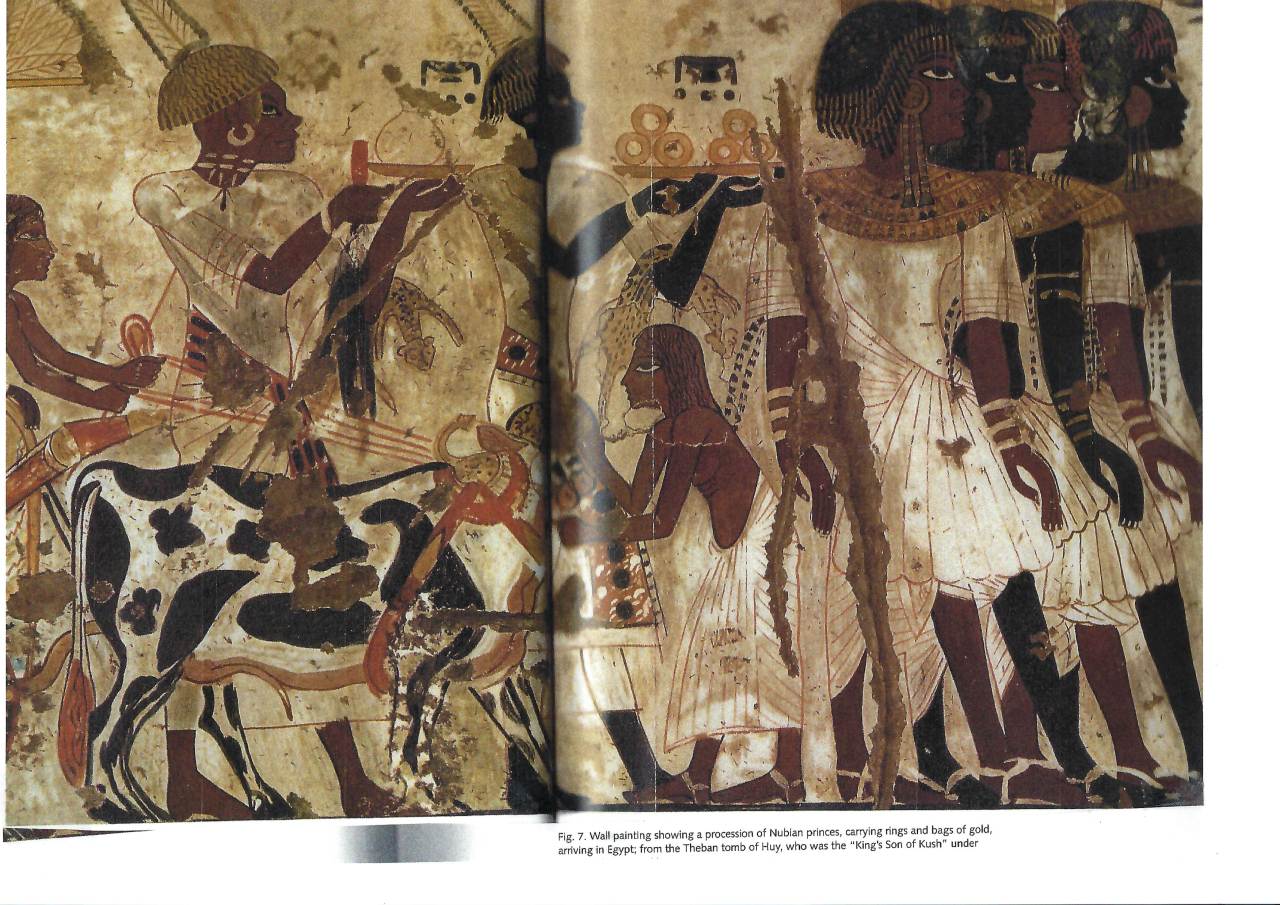
Word of clarification: The words Cush (Kush) and Ethiopia are used interchangeably depending on which Bible translation you are using. The Greeks produced a Bible during the Ptolemaic period which translated Cush as Ethiopia. The Greek word means burnt faces; so Ethiopia means land of Black People. The word Cush, which comes from ancient Egyptian, has no racial connotation. Even today the names Cush, Ethiopia, and Nubia are often used interchangeably in referring to the ancient country to the south of Egypt.
More to come.
1. (Theophile Obenga and Cheikh Anta Diop, General History of Africa II: Ancient Civilizations of Africa, Chapter 1, pp. 27-78).
Featured image is taken from Joyce L Haynes, Nubia: Ancient Kingdoms of Africa, pp. 14-15
 Why Didn't They Tell You?